
The complete guide
Choosing a Kids Desk and Chair Set for Everyday Study
Give schoolwork a place to land
Homework often starts wherever there is a clear patch of table. That can work for a while, but books need moving at dinner time, pencils go missing, and the chair may not suit the child using it. A dedicated desk gives those daily tasks a more settled home.
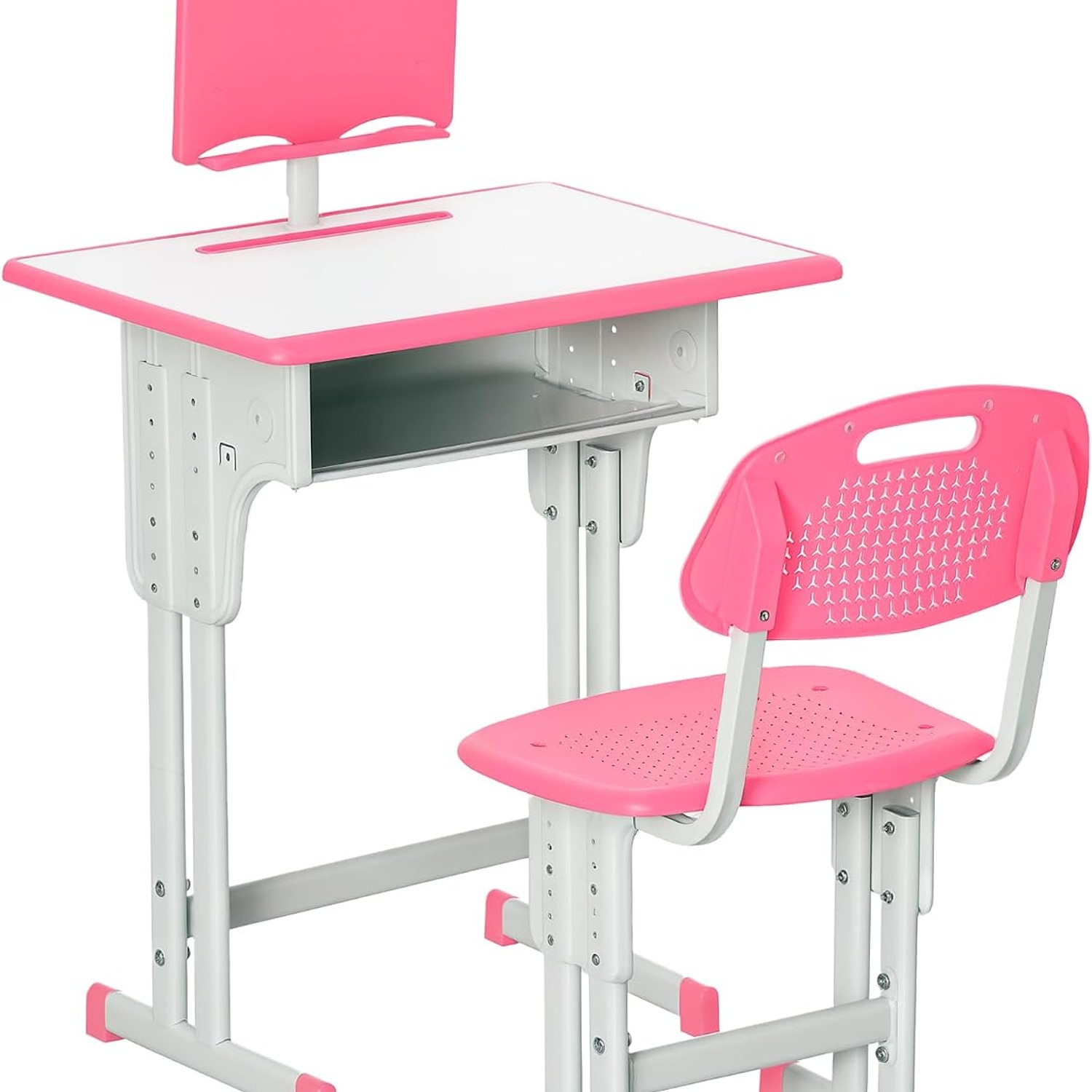
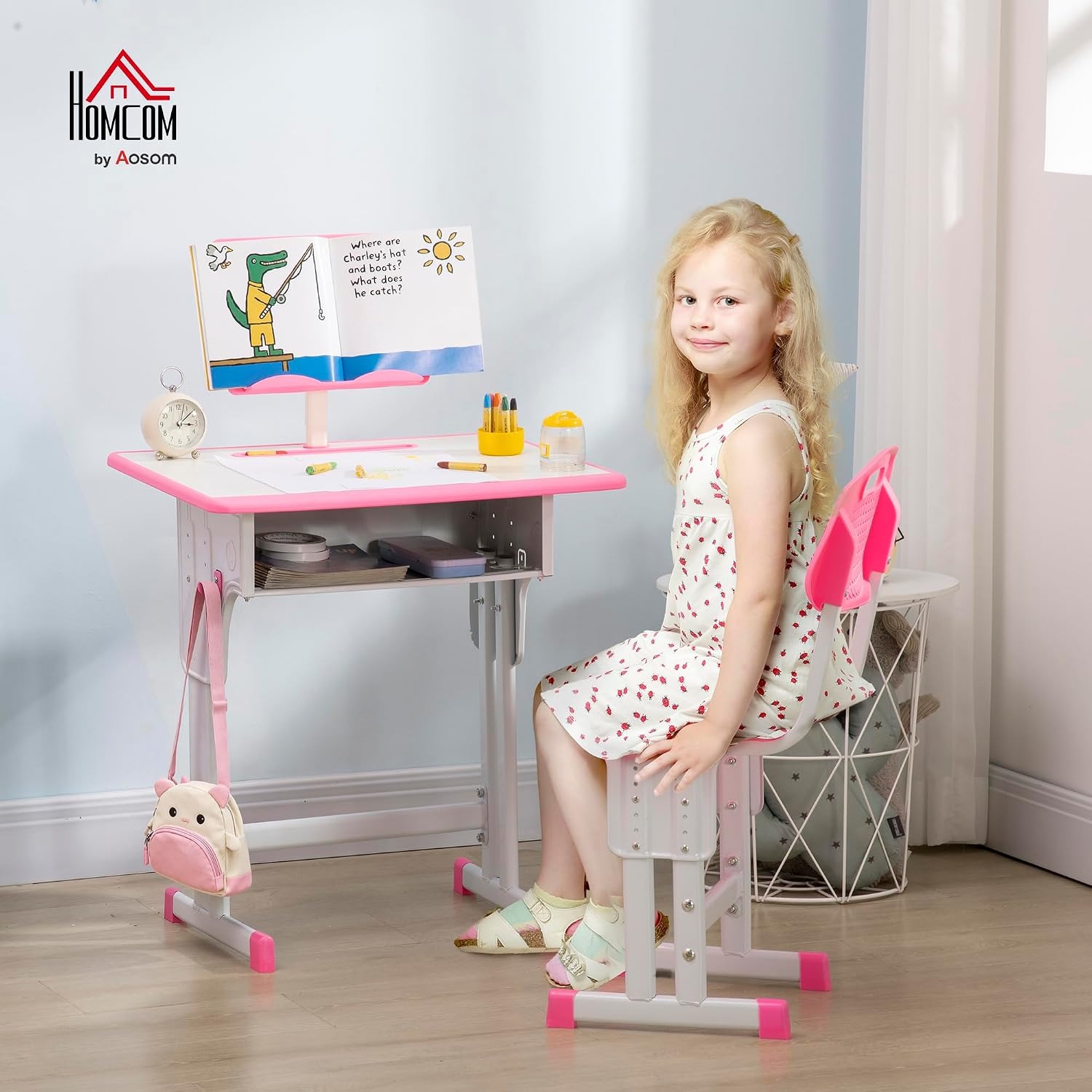
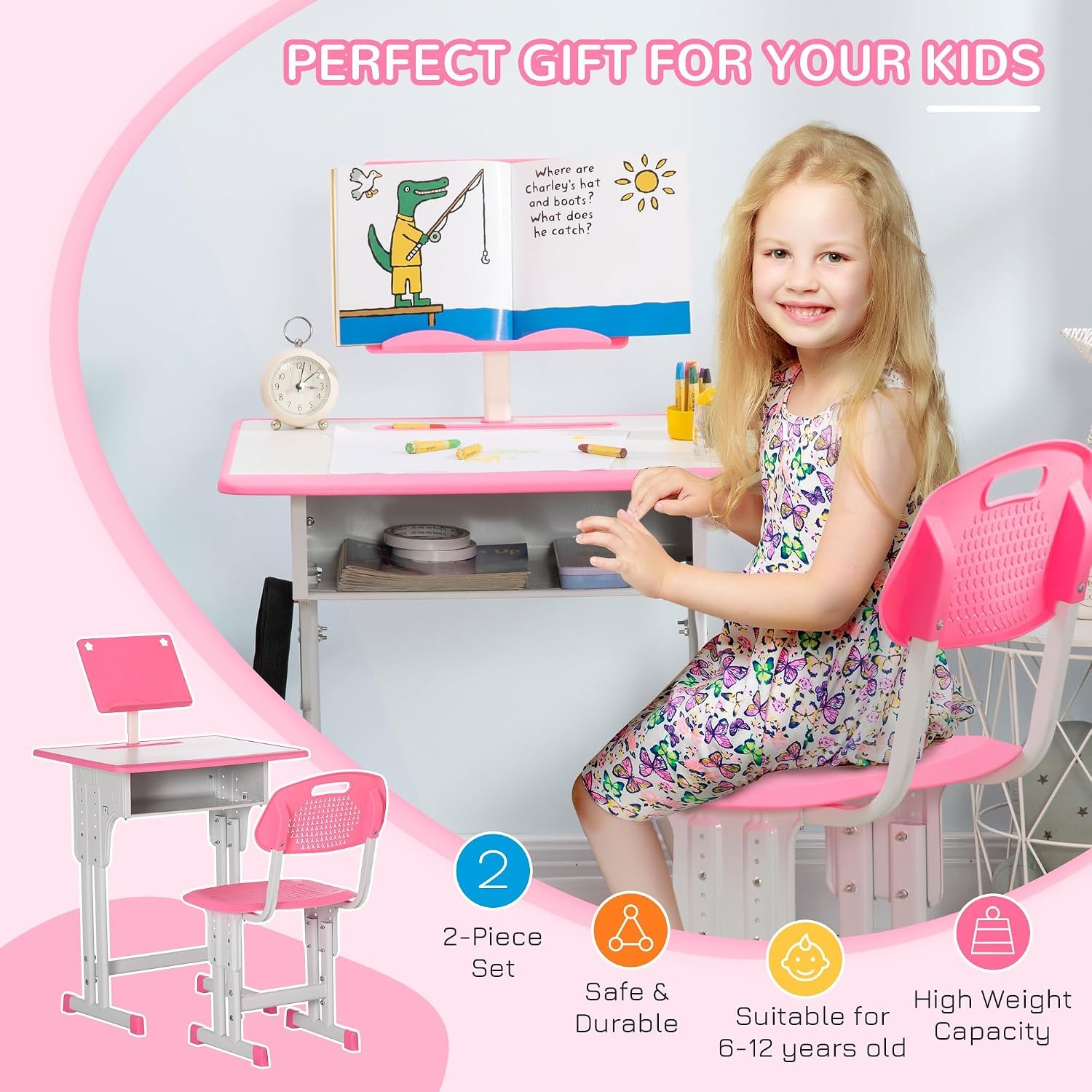
The kids desk and chair set combines a study surface, matching chair and storage in one pink design. It is intended for children aged 6 to 12, with adjustable heights to help you change the setup over time. Reading, writing and drawing are its main uses.
The useful question is not just whether your child likes the colour. It is whether the set fits your child, your room and the way schoolwork happens at home. Here is how to judge those points before buying.
What the height adjustment offers
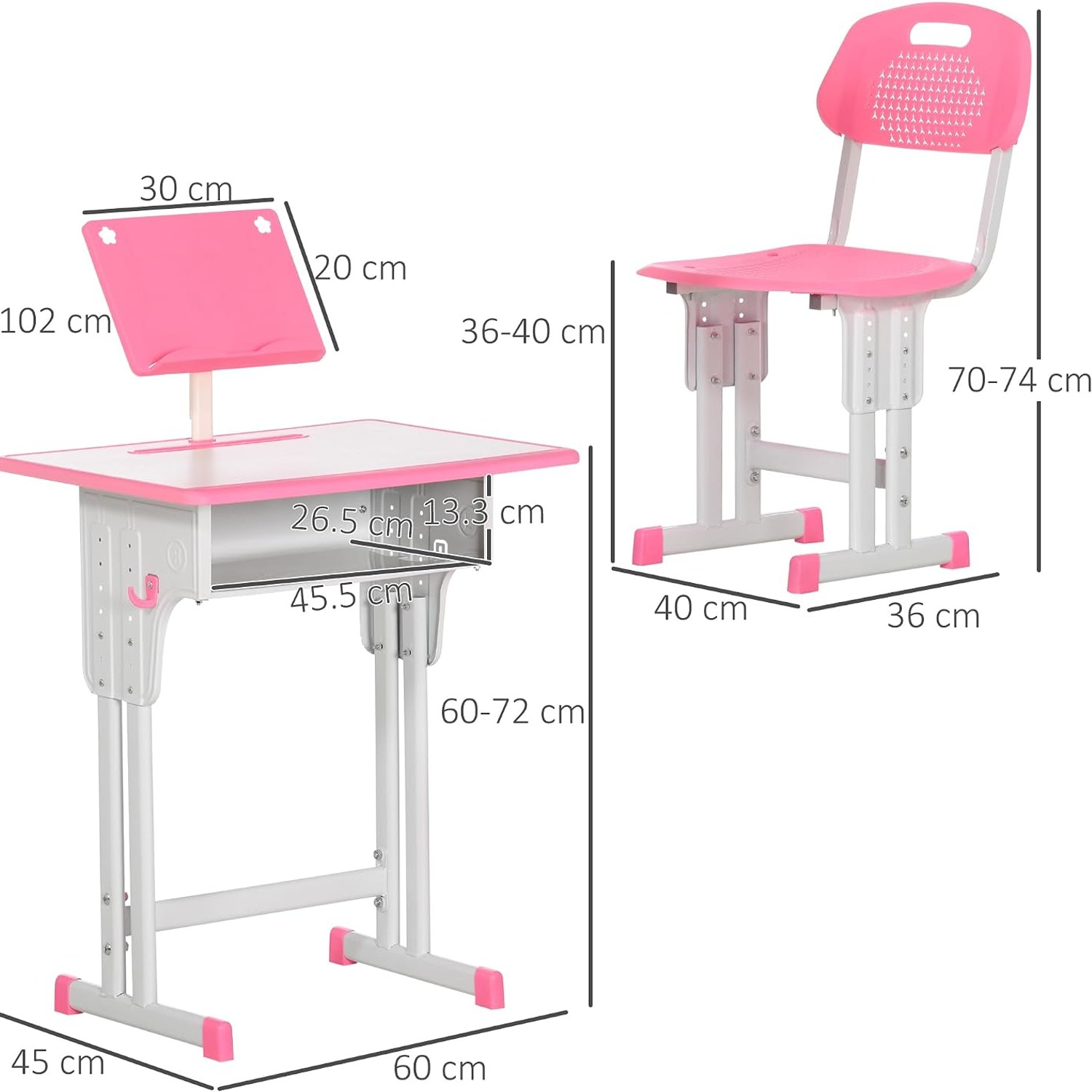
This height adjustable children's desk has a desk range of 60 to 72 cm. The chair seat adjusts from 36 to 40 cm. Those are separate measurements, so it is worth checking both rather than focusing only on the desk.
Adjustment gives you some room to respond as your child grows. It does not mean the set will fit every child throughout the full suggested age range. Children of the same age can differ quite a lot in height and leg length.
Before ordering, compare the listed ranges with a desk and chair your child already finds comfortable. Watch how they sit during a short writing task. If they have to reach up to the surface or lean forward for much of the time, that is useful information when comparing furniture.
The adjustment method is not described in the maker's description. Follow the supplied instructions rather than guessing how the parts release or lock into place.
Look at the chair as carefully as the desk
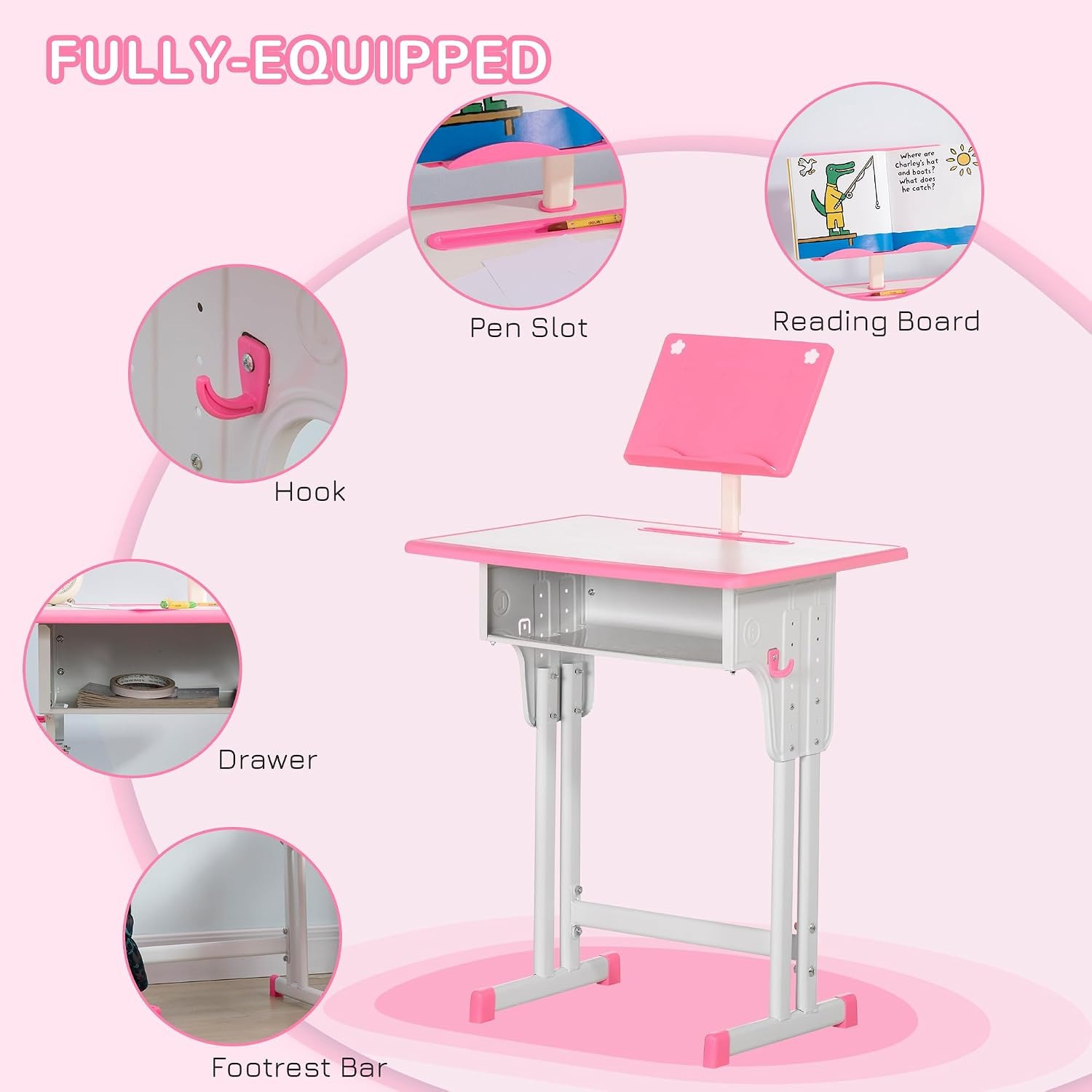
A study surface gets most of the attention in product photos, but the chair matters just as much. This adjustable study chair has a curved backrest and a footrest bar. These features are intended to help create a comfortable place to sit for daily tasks.
Check the whole seated position once the set is assembled. Your child should be able to reach their work without an awkward stretch. Look at how their legs sit and whether the footrest is useful at the chosen setting.
No chair can promise better focus or correct posture on its own. A suitable setup, breaks and changes of activity all matter. Treat the backrest and footrest as helpful features, not as a medical solution or a reason to keep a child seated for long periods.
Revisit the fit from time to time. A setting that worked at the start of a school year may need changing later.
Understand the measurements before planning the room
The listed dimensions are 60 x 45 x 102 cm. The desk height range is listed separately as 60 to 72 cm. Since the maker does not explain every measurement point, do not read the 102 cm figure as the adjustable desktop height.
Mark out the listed length and depth on the floor where you plan to place the desk. Then allow extra space for the chair to move back. A desk that fits against the wall can still feel awkward if it blocks a doorway or leaves no comfortable route past it.
If you are looking for a compact kids study table, the surrounding space deserves as much thought as the furniture itself. Consider nearby cupboards and drawers that need opening. Leave room for an adult to sit or stand nearby when helping with work.
Separate chair dimensions are not provided. Ask for further measurements if your room has a tight alcove or another fixed limit.
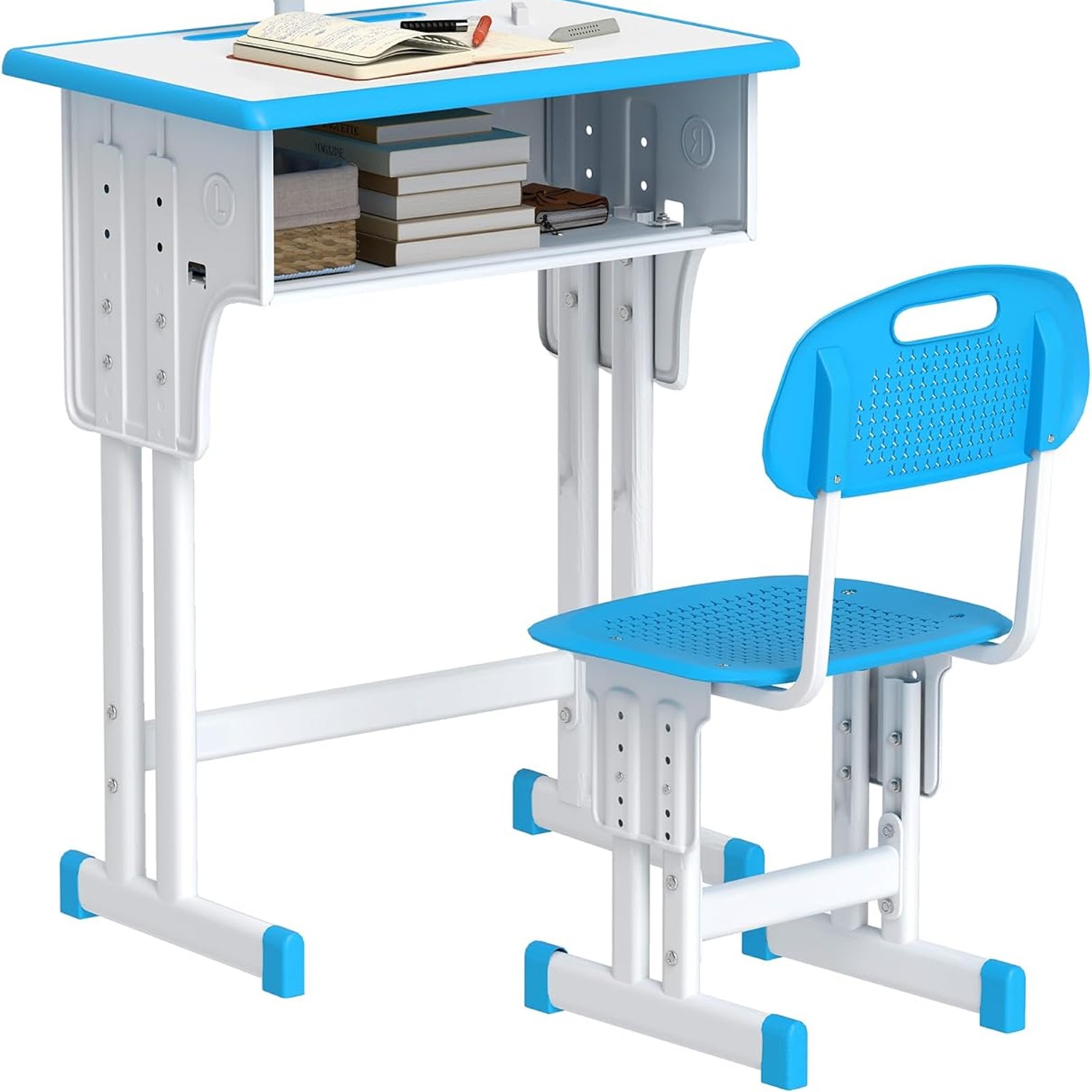
Decide how much storage you need
This children's desk with storage includes one drawer. The maker describes it as a place for books and school supplies. There is also a pen slot on the desktop for stationery used often.
That arrangement can help with a simple daily routine. Current work can stay close, while pens have a set place to return to when the task is done. It is easier to clear a surface when every item has somewhere to go.
The drawer's internal dimensions are not specified. Avoid assuming it will hold a particular large workbook, art pad or storage tray. If those items are central to your child's routine, check their measurements before relying on the drawer.
Think of this as a study station with useful everyday storage, rather than a replacement for every shelf or school bag hook in the room. Keeping less-used supplies elsewhere can leave the desk easier to use.
Make use of the book stand
A book lying open on a writing surface takes up space quickly. The included book stand offers a separate upright place for reading material, which can be useful when a child is working from a textbook while writing in an exercise book.
For a children's reading desk, this is a practical feature to consider. It can also help define where the reference material goes, instead of letting books and loose pages spread across the work area.
The maker does not give the stand's dimensions, adjustment range or book capacity. Check those points if your child uses unusually large or heavy books. Do not assume it is a tablet holder, as support for electronic devices is not listed.
Start with the materials your child uses most often. A feature earns its place when it helps with an ordinary school-night task, not just when it looks useful in a photo.
Match the set to everyday activities
The set is described for reading, writing and drawing. That makes it worth considering as a kids writing desk or a place for light creative work alongside homework.
Think about what usually lands on the table. A child working with a workbook and pencils has different space needs from one spreading out several large art sheets. The listed size gives you a starting point, but laying out those materials on an existing table can give a clearer sense of fit.
For a kids art and homework table, surface care also matters. The stated cleaning method is a dry cloth. Plan suitable protection for activities that could leave marks, and do not assume the finish can handle water, paint or strong cleaners.
There is no listed lamp, charging feature or electronic accessory. Plan lighting separately so the chosen corner is useful when daylight fades.
Know the construction and limits
The maker describes construction using MDF, steel tubes and polypropylene. The design has a rectangular shape, rounded corners and non-slip feet. Its listed weight is 9 kg.
The desk load limit is 80 kg, and the chair load limit is 100 kg. These figures describe load capacity, not recommended activities. A desktop is not a climbing platform, and a child's chair should not be treated as a step stool.
Non-slip feet help the set stay in place, but the floor still needs to be level. Once assembled, check for rocking or movement before your child uses it. Keep the area around the chair clear enough for normal movement.
Rounded corners are a useful detail in a busy room. They do not make supervision or sensible use unnecessary. Choose the location with nearby furniture and walking routes in mind.
Allow time for assembly and care
Assembly is required, and instructions are included. Set aside time to read them before putting the parts together. Check that the finished desk and chair are stable and that any adjusted parts are secured as directed.
The maker does not state an assembly time or list required tools. Avoid planning around a promised quick setup. If this is a gift, allowing time before the occasion can make the handover less rushed.
Routine care is straightforward. Wipe with a dry cloth, including around the pen slot and book stand where dust can collect. Clear the drawer occasionally so forgotten papers do not crowd out current work.
Check fittings periodically and follow the instructions for any later height changes. If a part becomes loose or damaged, address it before the set returns to use.
Choose for the child, not just the room
A pink kids desk and chair can be an appealing addition to a bedroom, but it is worth involving the child in the choice. They will be the person using it for routine tasks.
Ask where they prefer to work and what they need within reach. Some children like a quiet bedroom corner. Others need help nearby and may use a shared space more often. Choose a position that supports the routine you actually have.
If buying a study desk for ages 6 to 12 as a gift, check with a parent or carer first. Confirm the available space and the height ranges. Also allow for assembly, since this is furniture rather than a ready-to-use boxed activity.
Delivery timing and product-specific warranty terms are not given by the maker. Review our delivery and returns pages's current delivery and returns information before placing the order.
The short version
This study desk brings adjustable desk and seat heights together with a drawer, book stand and pen slot. It is a practical option to compare when a child needs a defined place for daily reading, writing and drawing.
Start with fit. Check the 60 to 72 cm desk range, the 36 to 40 cm seat range and the listed overall dimensions against your child and room. Then consider storage, assembly and care. Those checks will tell you more than colour alone about whether this set belongs in your home.