
The complete guide
Choosing a Play Food Set for Kitchen and Picnic Games
When the pretend kitchen needs something to serve
A toy kitchen can have cupboards, a sink, and plenty of knobs, yet still leave a child asking what to cook. Play food gives that space a purpose. It turns an empty pan into dinner and a basket into the start of a shopping trip.
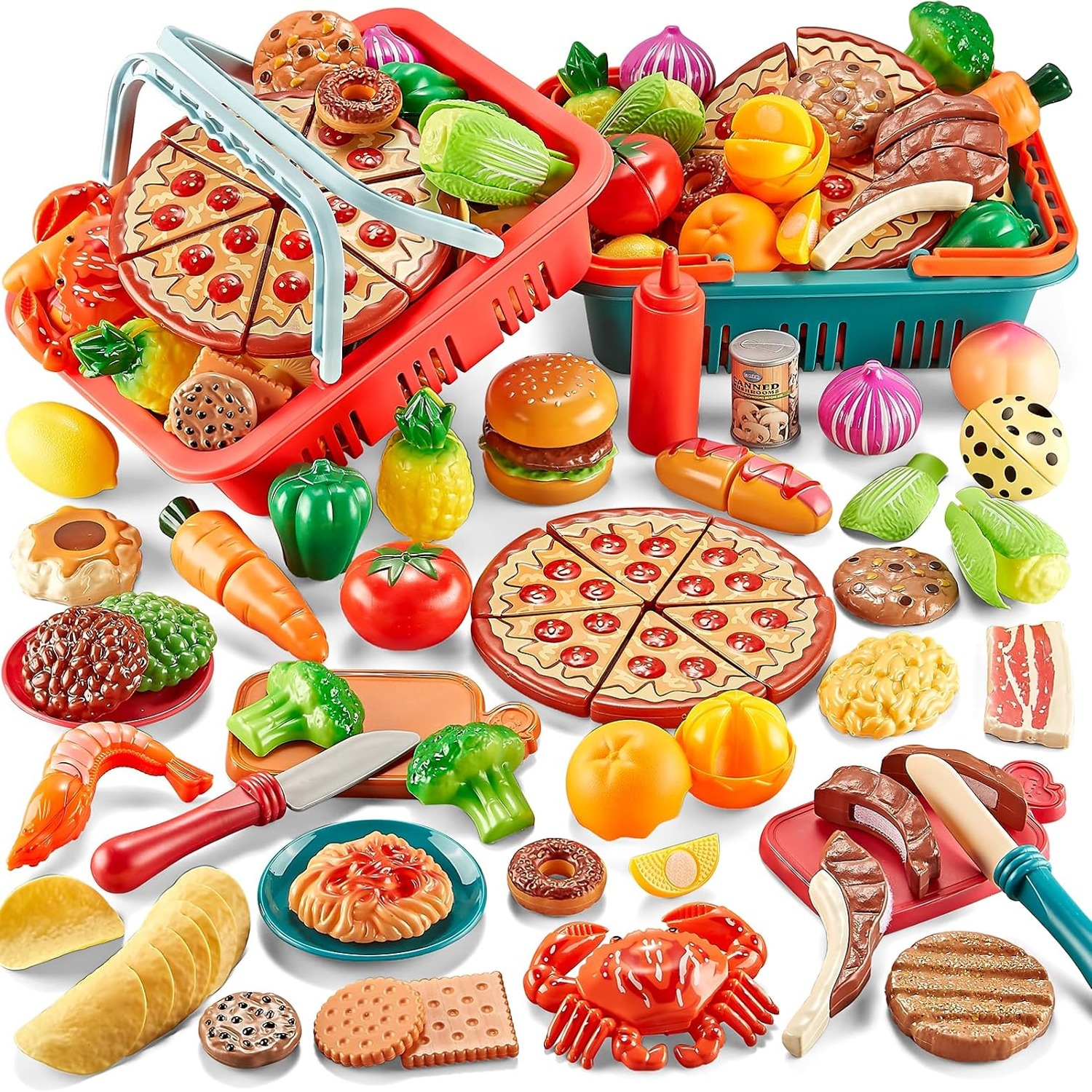
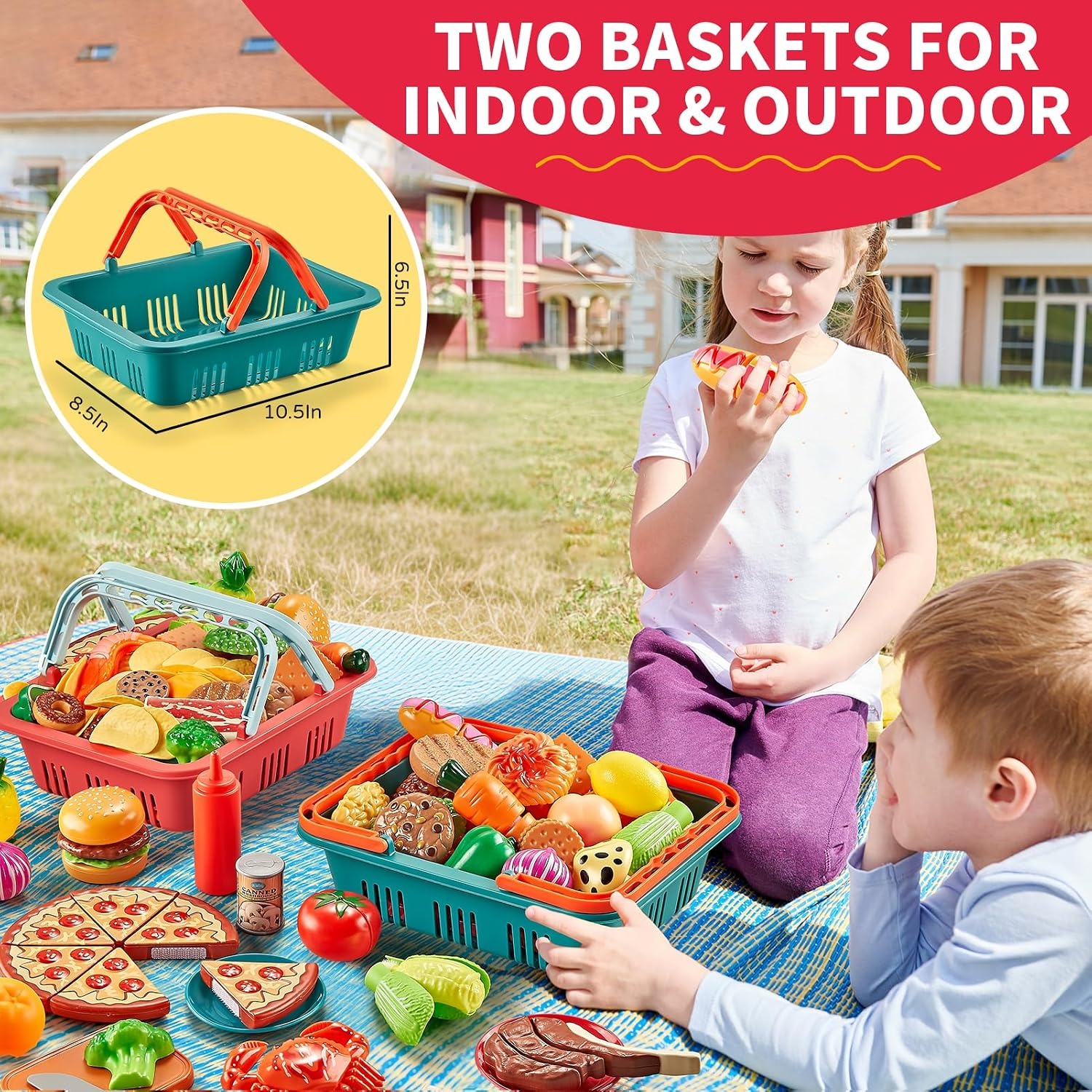
The Play Food Set with Two Picnic Baskets combines pretend ingredients with a way to carry them. The maker describes 80 pieces, including pizza, fruit, vegetables, and other foods. Two baskets let the story move from shopping to preparation, then on to a pretend picnic.
The useful question is not simply how many pieces a set contains. It is whether those pieces match the games your child enjoys. A child who likes packing, sorting, and serving may approach this collection very differently from one who wants to spend time separating toy food.
How the food preparation play works
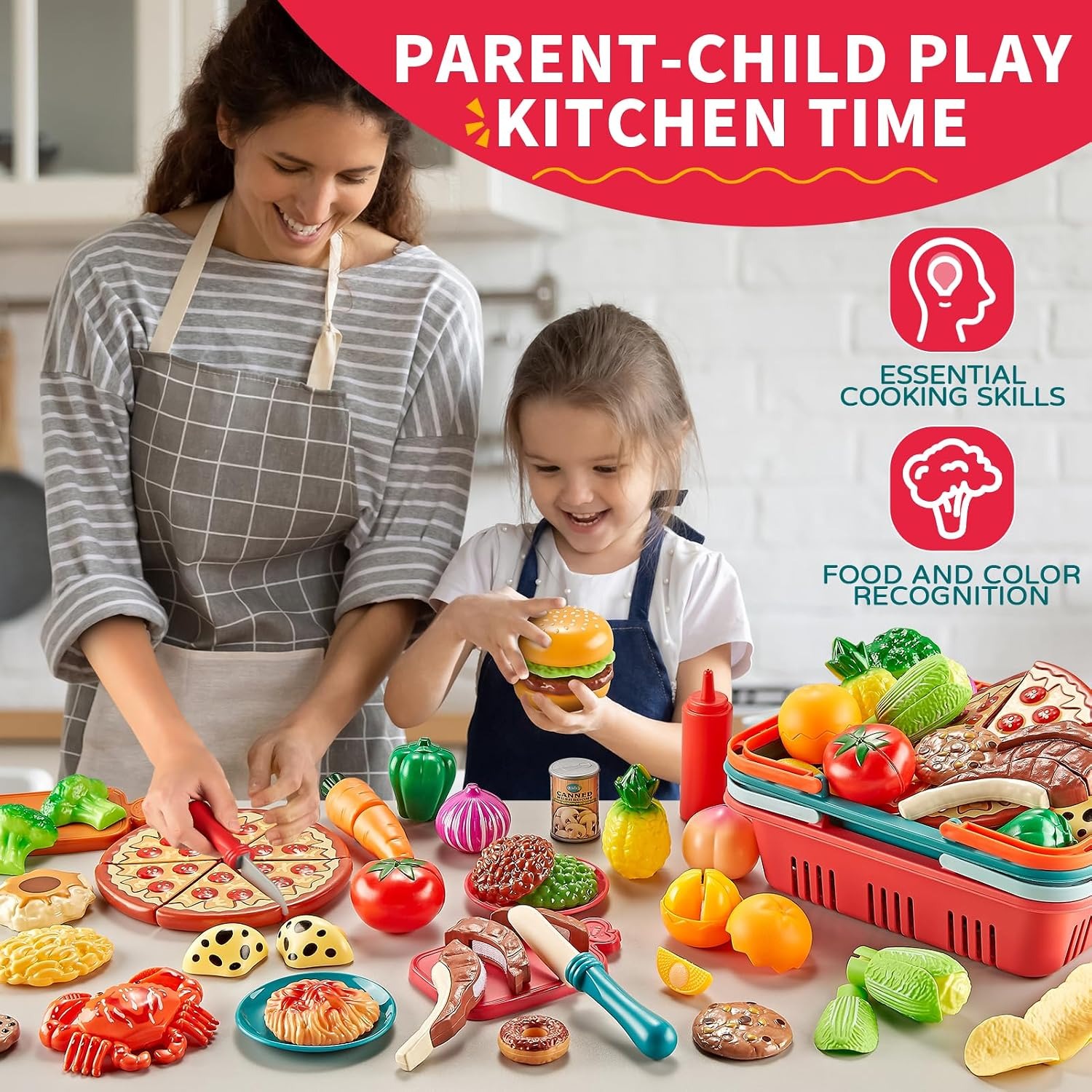
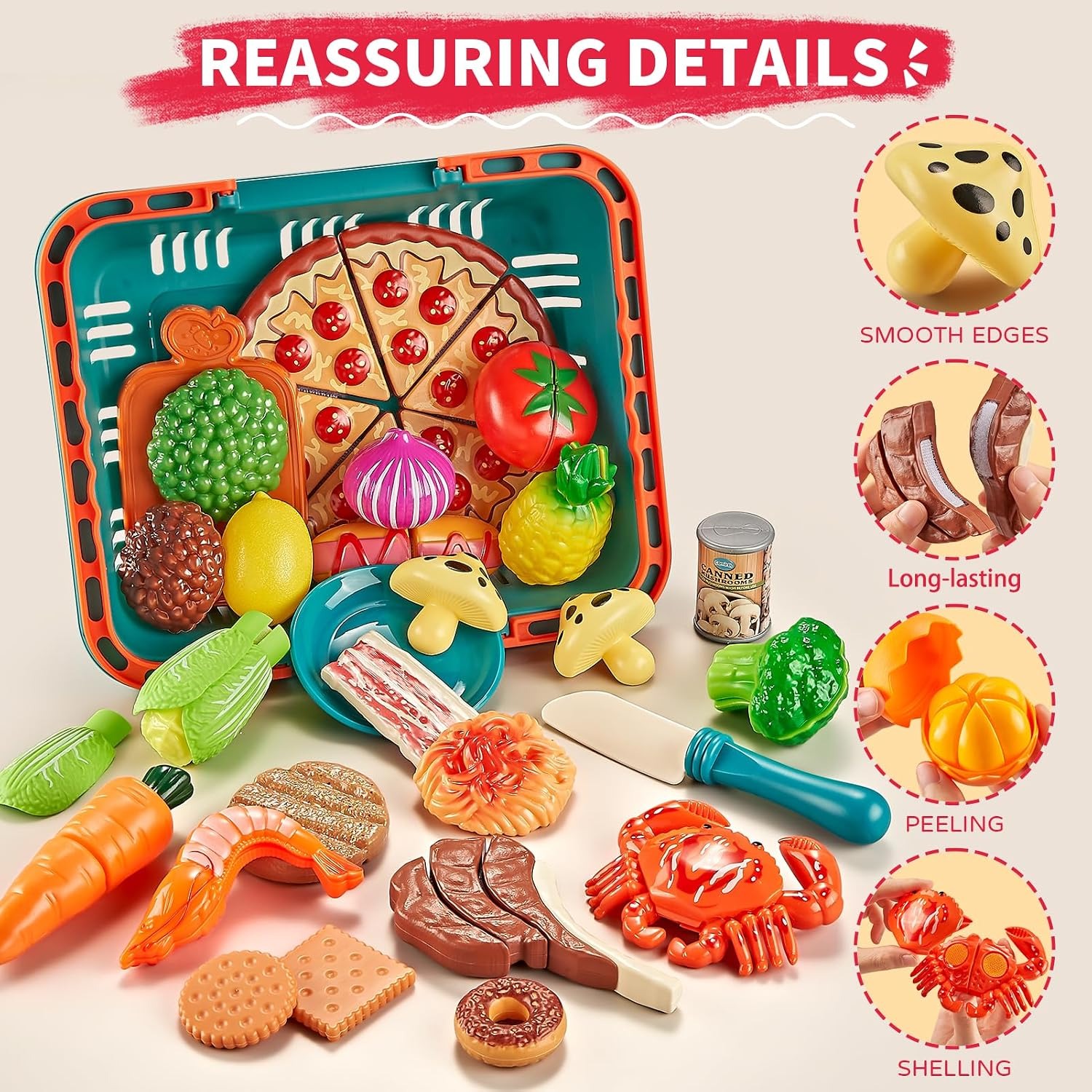
Selected foods have hook and loop joins. Children can pull or pretend-cut these parts apart, then reconnect them for another round. The maker describes toy knives and opportunities to act out cutting, peeling, or shelling.
This adds an action to the game beyond placing food on a plate. A child can choose an ingredient, prepare it, and offer it to a guest. There is no need to follow a recipe or complete each step in a set order.
Do not assume every item comes apart. Some foods may serve as ingredients or props without a cutting action. The maker does not give a full breakdown of the separable pieces, so check the supplied contents when the set arrives.
Keep these activities clearly separate from real food preparation. Toy food is for make-believe, and the tools should stay in the play area.
What two baskets add
Toy shopping baskets can change how children use a food collection. Instead of starting with everything spread across the floor, they can choose what to buy and carry it to their pretend kitchen.
One basket might hold groceries while the other waits at the picnic spot. In a shared game, each child could have a basket and take turns choosing ingredients. You can also suggest sorting foods between them, then let the child decide the sorting rule.
The baskets may help with gathering pieces afterward, but their capacity is not listed. It is worth having a separate storage container ready rather than expecting every item to fit.
Think of the baskets as part of the play, not just packaging. They give children a reason to move between stages of a story and return for something they forgot.
Who this set is likely to suit
The product details recommend ages 36 months to 8 years. That range is the clearest age guidance in the maker's description and should take priority over broad toddler wording elsewhere in the maker's description.
Within that range, interest matters. Some children enjoy copying familiar household jobs. Others prefer running a café, feeding dolls, or making up unusual menus. A kids kitchen food set can support any of these games without needing a fixed script.
Younger children within the recommended range may enjoy naming and moving pieces. Older children might add menus, prices, or more detailed roles. Those are possible ways to play, not promised stages or outcomes.
For a shared play space, consider who else can reach the toys. Keep the collection away from younger siblings who are below the stated age recommendation, and follow all supplied warnings.
Choosing by play style rather than piece count
An 80-piece description sounds straightforward, but it does not tell you how many complete meals, separate foods, or cutting activities the set contains. The maker does not provide an item-by-item inventory or explain how the count is calculated.
Look at the types of play instead. If your child enjoys pretend grocery shopping, the baskets may be the main attraction. If they like hands-on preparation, the hook and loop pieces may matter more.
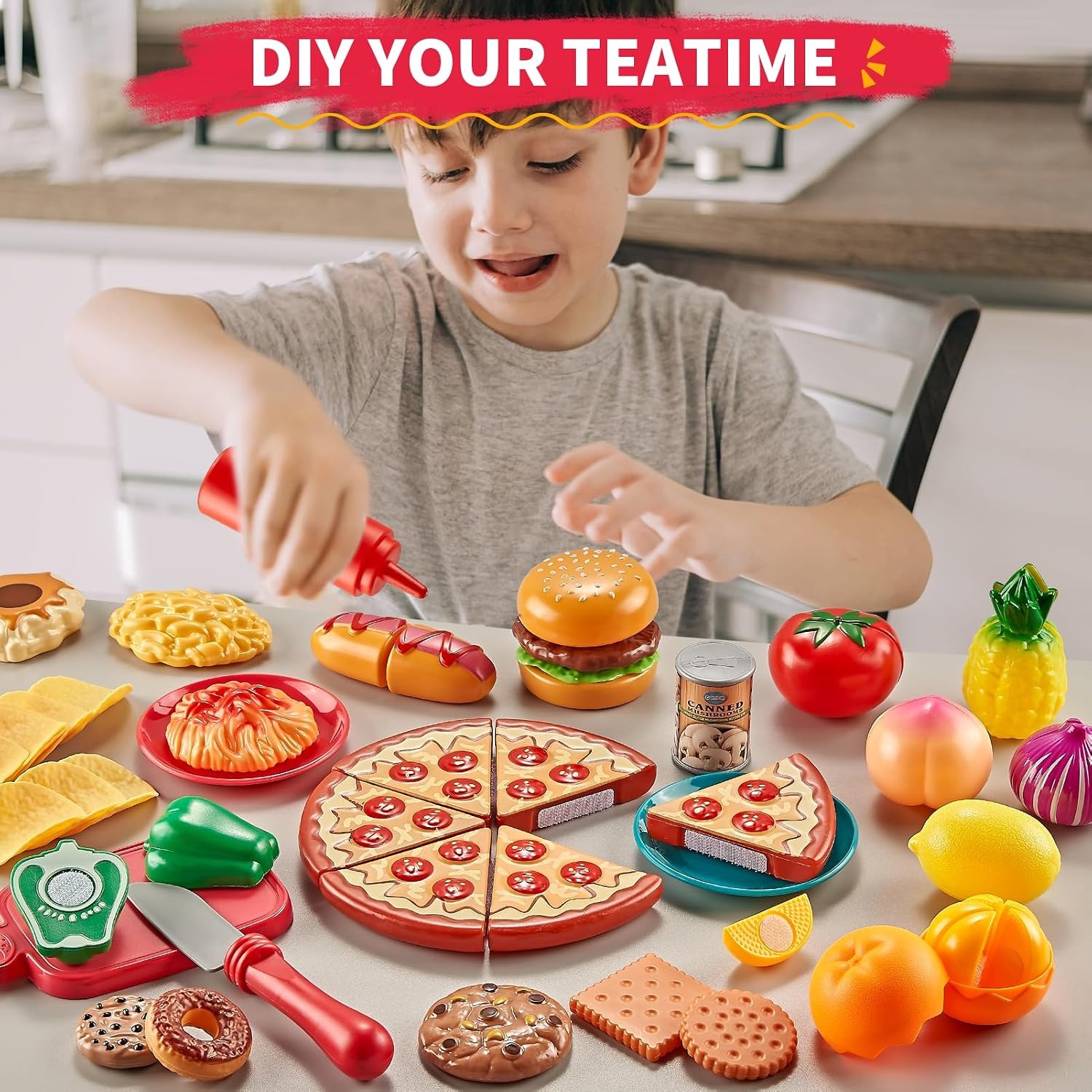
The food selection includes familiar produce alongside pizza, seafood, desserts, and other ingredients. That variety can give a child more choices when making a menu. It also means you do not have to introduce all the pieces at once.
Start with a manageable selection if a large spread feels distracting. Add more when the game calls for them. A smaller group of toys can still support a long afternoon of make-believe.
Checking size and fit before buying
The listed dimensions are 12.7 x 25.4 x 17.8 cm, and the listed weight is 767 g. The maker does not say what the dimensions measure. They should not be treated as the size of each basket or each food piece.
This matters if you are buying play kitchen accessories for a small oven, narrow shelf, or fitted storage drawer. You cannot confirm compatibility from the overall dimensions alone.
If fitting a particular space is essential, ask for the relevant measurements before ordering. Otherwise, plan for open-ended tabletop or floor play rather than a precise fit inside an existing toy appliance.
The product details describe the size as child-size and list plastic as the material. They do not identify a specific plastic type. Avoid making assumptions about care or heat resistance from the material name.
Starting a game without taking over
You do not need an elaborate setup. Clear a space, put a few foods in one basket, and ask what is on the menu. Let the child's answer set the direction.
A pretend picnic set can begin with an invitation to a favourite soft toy. The child chooses what to pack, carries the basket to a blanket, and serves the guest. If the story changes into a shop halfway through, follow along.
For a kitchen game, offer a simple request such as a meal with vegetables or something to share. Avoid turning every choice into a question with a correct answer. The point is to give the child room to make decisions.
You can join briefly, then step back when the game takes shape. Sometimes the most useful adult role is simply being a willing customer.
Making room for shared play
Food toys offer clear roles, but children may still want the same piece at the same time. Two baskets provide separate spaces to begin, though they do not remove the need for turn-taking.
Try letting one child shop while another prepares the pretend meal. Swap roles when they are ready. A child who prefers watching can join as a guest rather than being asked to cook.
Use plain language to support the game. Asking whether the café is open or whether a basket is ready feels more natural than directing every move.
Role play is the stated educational focus of this set. Shared games can provide chances to listen, request items, and negotiate roles. They should still feel like play, not a lesson that must reach a particular result.
Sorting, naming, and everyday conversation
Toy fruit and vegetables give you something concrete to talk about. Children can name familiar foods, ask about unfamiliar ones, or group pieces in their own way.
One child may sort by colour. Another may put picnic foods together or separate pretend ingredients from ready-to-serve meals. Ask how they chose the groups before suggesting a different rule.
Counting can happen naturally while packing a basket or setting places. There is no need to quiz the child on the whole collection. A brief exchange about how many guests are coming may be enough.
These are optional play ideas, not claims that a toy will produce a certain skill. Keep the conversation light and leave room for stories that have nothing to do with sorting or counting.
Care, checks, and tidy-up
Follow any care directions supplied with the set. For general surface cleaning, use a soft damp cloth, then let the pieces dry before storage. Dishwasher use and immersion are not confirmed by the maker.
Pay attention to the hook and loop joins. Loose dirt and lint can get in the way when pieces reconnect. Check joins and tools during normal tidy-up, and take damaged items out of use.
Keep toy food separate from real snacks, especially during a picnic-themed game. A clear play area helps maintain that boundary.
Make putting things away part of closing the shop or packing up the picnic. Gather the food, check the floor for loose pieces, and store the collection where younger children cannot reach it.
Buying it as a gift
A play kitchen gift makes most sense when it matches an existing interest. Check the child's age first, then ask whether they enjoy cooking, shopping, or serving games.
Find out what they already own. Another food collection may be welcome if it adds baskets or preparation play, but a repeat set may not suit every household.
Delivery timing, gift wrapping, and warranty details are not specified by the maker. Check our delivery and returns pages's current information before planning around a birthday or holiday. Read the returns policy as well, particularly if you are unsure about fit or suitability.
The short version
This set brings together varied pretend foods, selected hook and loop preparation pieces, and two picnic baskets. Its stated age recommendation is 36 months to 8 years.
Choose it for the shopping, cooking, and picnic stories those features could support. Check the supplied warnings, avoid assuming a precise fit with other toys, and give your child room to decide what is on the menu.